Crossing the border from Raxaul in India into Birgunj in Nepal requires setting your wristwatch exactly 15 minutes ahead. While India observes Indian Standard Time (IST) at UTC+5:30, Nepal maintains one of the world's only two quarter-hour national standard time zones: UTC+5:45.
The Geographic Logic of 86°15' East Longitude
Prior to 1986, Nepal aligned loosely with Kathmandu local mean time, which calculated around UTC+5:41:16. When the Nepalese government formalized national standard time, rather than adopting India's UTC+5:30 (based on the 82°30'E meridian in Mirzapur) or moving to an even UTC+6:00 (Bangladesh), they anchored the country's official clocks precisely to the solar meridian of 86°15'E.
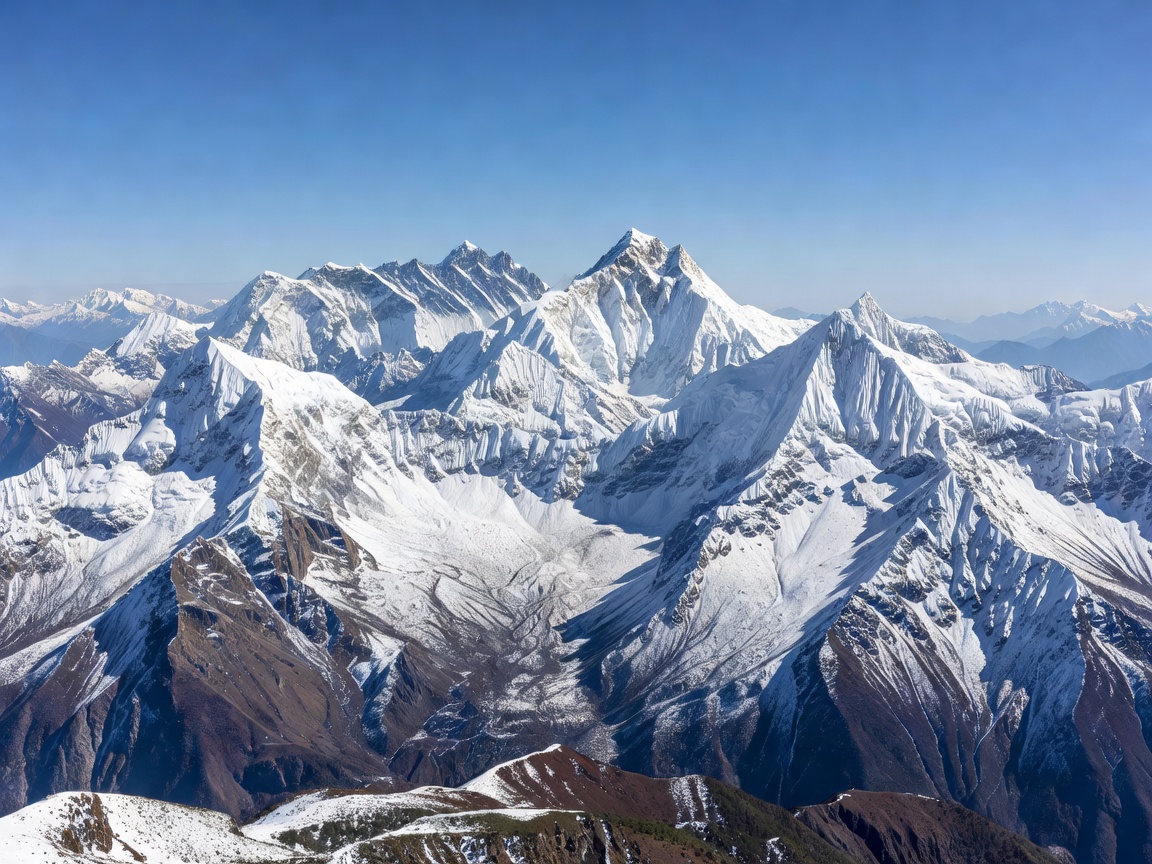
This exact meridian passes directly through the summit of Mount Gauri Sankar (7,134 m), a sacred mountain situated 100 kilometers east of Kathmandu. Because the sun reaches its zenith over this mountain at exact midday, the calculation of UTC+5:45 (5 hours, 45 minutes) reflects the true astronomical solar time of Nepal's heartland with remarkable mathematical purity.
Mathematical Meridian Breakdown
Earth rotates 360 degrees in 24 hours, equaling 15 degrees of longitude per hour, or 1 degree every 4 minutes. Nepal's reference line at 86°15' (86.25°) multiplied by 4 minutes equals 345 minutes = exactly 5 hours and 45 minutes ahead of the Prime Meridian in Greenwich.
Sovereignty and Chronopolitical Identity
The adoption of UTC+5:45 was also a profound statement of national independence. Completely surrounded by India on three sides and Tibet (China) to the north, Nepal demonstrated its autonomy through timekeeping. By operating 15 minutes ahead of India and 2 hours and 15 minutes behind Beijing, Nepal maintains a distinct rhythm for international aviation, telecommunications, and daily commerce.
Practical Impacts on Travelers and Aviation
- Flight Schedules: Flights from New Delhi (DEL) to Kathmandu (KTM) appear to take 15 minutes longer in flight logs than the reverse route due to the quarter-hour boundary step.
- Broadcast Synchronizations: International broadcasts from BBC World Service or All India Radio have required bespoke scheduling tables tailored specifically for Nepali listeners.
- No Daylight Saving: Nepal does not observe Daylight Saving Time (DST); its proximity to the equator results in relatively stable sunrise and sunset windows year-round.
For verified historical data and geopolitical meridian archives, visit the International Bureau of Weights and Measures (BIPM) and the IANA Time Zone Database for Asia/Kathmandu.